
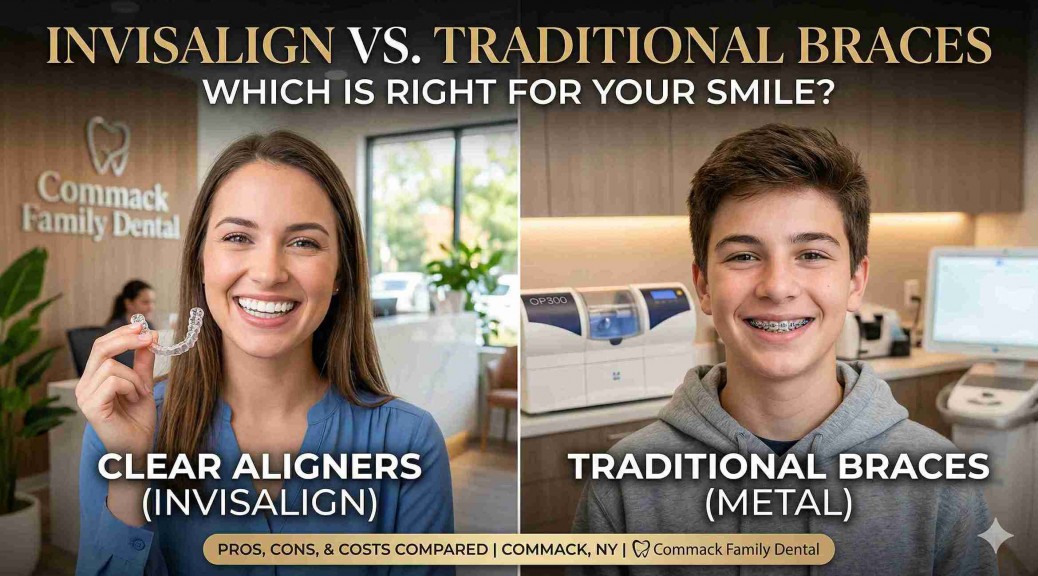
Are you dreaming of a straighter smile but feel unsure about the best way to get there? If you are choosing between Invisalign and traditional braces, you are not alone. Both are fantastic orthodontic treatment options that effectively straighten teeth and correct bite issues. However, they differ significantly in comfort, cost, and everyday appearance.
Clear aligners vs metal braces is a common debate. While braces use brackets and wires to shift teeth into place, Invisalign relies on a series of virtually invisible trays. Deciding which path to take depends on your unique dental needs, lifestyle, and budget. If you are ready to explore your options, learn more about Invisalign in Commack to see how modern dentistry can transform your smile.
How Invisalign Works vs. Traditional Braces
Understanding how Invisalign works compared to traditional braces is the first step in your journey. Traditional braces use metal or ceramic brackets glued to your teeth, connected by a highly tensioned wire. Your orthodontist tightens this wire periodically to gradually pull your teeth into perfect alignment.
On the other hand, Invisalign uses 3D imaging technology to map out a complete treatment plan. You will wear a series of custom-made, clear plastic aligner trays. Every week or two, you swap out the old tray for a new one, gently moving your teeth step-by-step.
Treatment length varies for both, but maintaining your oral hygiene differs greatly. Braces require special flossing tools and careful brushing around brackets, while aligners pop right out for easy cleaning. Ready to find out which method fits your mouth? Schedule your orthodontic consultation with our team today.
Quick Comparison Chart
| Feature | Invisalign | Traditional Braces |
|---|---|---|
| Visibility | Nearly invisible | Highly visible (metal or ceramic) |
| Comfort | Smooth plastic trays; no sharp edges | Wires and brackets can cause cheek friction |
| Maintenance | Easy to remove and clean normally | Must brush carefully around brackets and wires |
| Ideal For | Mild to moderate alignment issues | Complex dental and bite issues |
Pros and Cons of Invisalign
There is a reason why so many adults and teens gravitate toward clear aligners. The biggest pro of Invisalign is its aesthetic appeal. The trays are nearly invisible, allowing you to smile confidently during your treatment. Because they are removable, there are no food restrictions—you can still enjoy popcorn, apples, and sticky foods. Cleaning your teeth is also much easier compared to navigating around metal brackets.
However, Invisalign has its cons. It requires strict discipline. You must wear the trays for 20 to 22 hours a day for the treatment to work effectively. Additionally, clear aligners are not always the ideal solution for severe or complex alignment issues. Our orthodontists at Commack Family Dental have helped many adults choose Invisalign for discreet treatment, but we always evaluate your specific needs first to ensure it’s the right fit.
Pros and Cons of Traditional Braces
Traditional braces have been the gold standard in orthodontics for decades, and for good reason. Their biggest advantage is their sheer effectiveness. Braces can tackle the most complex dental issues, from severe crowding to major bite misalignments. Furthermore, because they are permanently attached to your teeth, they require absolutely no patient compliance—they are working 24/7 whether you think about them or not. Plus, younger patients often love choosing customizable colors for their rubber bands.
On the downside, braces are much more visible. They can also be harder to clean, increasing the risk of plaque buildup if you aren’t diligent. You may also experience occasional discomfort from wires poking your cheeks or lips. Ultimately, choosing between braces and Invisalign depends heavily on your lifestyle, age, and your starting dental condition.
Cost Comparison: Invisalign vs Braces
Let’s talk about the bottom line: Invisalign cost versus braces cost. Generally, Invisalign often costs slightly more than traditional braces, but the sheer convenience and aesthetic benefits easily justify the difference for many patients.
In the United States, you can typically expect the following general cost ranges:
-
Traditional Braces: $3,000 – $7,000
-
Invisalign: $3,500 – $8,000
Keep in mind that these are just averages. The final price depends on the complexity of your case and how long your treatment takes. Fortunately, many dental insurance plans cover a portion of both treatments equally. We also offer flexible payment plans to make your dream smile highly affordable. If you are looking for trusted dental care in Commack, our front desk team is always here to help you navigate your insurance benefits and financing options.
Which Option Is Right for You?
Deciding between Invisalign and traditional braces comes down to personal preference and clinical necessity. Consider your age, daily lifestyle, treatment goals, and budget. If you are a busy professional who wants a discreet look and has the discipline to wear trays daily, Invisalign is likely a winner. If you have severe crowding or want a “set it and forget it” solution, traditional braces might be the better route.
The best way to make a final decision is by letting a professional evaluate your smile. Schedule your orthodontic consultation today to take the guesswork out of the process.
FAQs: People Also Ask
Is Invisalign faster than braces?
In many mild to moderate cases, Invisalign can be faster than traditional braces. Because the trays apply gentle, continuous pressure to all teeth simultaneously, some patients see their final results in as little as 6 to 12 months.
How long does Invisalign take to work?
You will likely start noticing subtle changes in your smile within the first few weeks of wearing your trays. However, full treatment time usually ranges from 12 to 18 months, depending on how consistently you wear them.
Are braces or Invisalign better for teenagers?
It depends on the teen! Invisalign offers a “Teen” line with compliance indicators (small blue dots that fade as the trays are worn). However, if a teenager is prone to losing things or won’t wear the trays for 22 hours a day, traditional braces are the safer, guaranteed bet.
Does Invisalign hurt less than braces?
Generally, yes. Invisalign pros and cons often highlight comfort. While you will feel some pressure for the first day or two after switching to a new aligner tray, there are no sharp metal wires or brackets to cut your cheeks or lips.
Can you eat with Invisalign on?
No, you should never eat with your Invisalign trays in your mouth. Chewing can warp or damage the plastic, and dark foods or drinks can stain them. Always remove your aligners before eating or drinking anything other than plain water.
Which is cheaper: Invisalign or braces?
Traditional metal braces are typically slightly cheaper than Invisalign. However, the exact cost difference varies by case complexity. To explore exact pricing and learn more about Invisalign treatment in Commack, reach out to our team.
Conclusion
Both Invisalign and traditional braces offer reliable paths to a beautifully straight, healthy smile. Whether you prioritize the invisible convenience of clear aligners or the robust, hands-off power of metal brackets, the choice is ultimately yours to make alongside a dental professional.
At Commack Family Dental, our orthodontic experts are dedicated to helping you choose the best treatment for your specific smile goals and budget. Ready to get started? Book your consultation today or visit our Contact Page to reach out online!