Category Archives: Cosmetic Dentistry

Root Canal vs. Extraction: How to Decide

When a tooth is badly damaged or infected, your dentist may say something you’d rather not hear: you either need a root canal or the tooth has to come out. It’s a stressful moment, and the decision can feel like it needs to be made on the spot.

The good news is that you rarely have to guess. The root canal vs. extraction question usually has a clear answer once your dentist has examined the tooth and seen the X-rays. This guide explains how each treatment works, what dentists look at when recommending one over the other, how they compare on pain, recovery, and cost, and what questions to ask so you feel confident in your decision.

This article is general education. Only a dentist who has examined your tooth can tell you which option is right for you.

The Short Answer

Whenever a tooth can be saved and restored, saving it with a root canal is generally the preferred choice. Your natural tooth is usually the best long-term option for chewing, speaking, and keeping your bite and jawbone healthy. Extraction makes sense when the tooth cannot be saved, when it cannot be restored to function, or when the problem is likely to return.

Neither option is “better” for everyone. It depends on the condition of your tooth, your gums and bone, your overall health, and your goals.

What Is a Root Canal?

Inside every tooth is soft tissue called the pulp, which contains nerves and blood vessels. When deep decay, a crack, or an injury lets bacteria reach the pulp, it can become inflamed or infected and cause pain, swelling, or an abscess.

During a root canal, the dentist numbs the tooth, removes the infected pulp, cleans and shapes the inside of the tooth, and seals it. The tooth is then protected, usually with a crown. The result is a tooth that stays in your mouth, without the infected tissue inside it. You can read about the full procedure on our page for root canal treatment in Commack, NY.

What Is a Tooth Extraction?

An extraction removes the entire tooth from its socket. A simple extraction is used for a tooth that is visible above the gum line. A surgical extraction is used when a tooth is broken at the gum line, has complicated roots, or is impacted, and may involve a small incision in the gum.

After an extraction, the infection or problem tooth is gone, but so is the tooth. That leaves a gap that usually needs to be filled to protect your bite, your neighboring teeth, and your jawbone.

When a Root Canal Is Usually the Better Choice

Your dentist is likely to recommend a root canal when:

  • There is enough healthy tooth structure left. If the tooth can be rebuilt with a filling or crown after the root canal, it can usually be saved.
  • The roots and surrounding bone are healthy. A tooth with strong support has a good chance of lasting for years.
  • The infection is limited to the inside of the tooth. Pulp infection without major bone destruction is the classic case for a root canal.
  • The tooth is important for chewing. Back molars do a lot of work, and saving them helps you keep your bite.
  • You want to avoid replacing a missing tooth. Keeping the tooth can mean no bridge, no implant, and no gap.
  • The tooth is in the front of your smile. Saving a visible tooth keeps your appearance natural.

A tooth that has had a root canal and a good crown can last for many years, and often for a lifetime with good care.

When Extraction Is Usually the Better Choice

Sometimes removing the tooth is the healthier or more practical option. Dentists often recommend extraction when:

  • The tooth is too broken down to restore. If there isn’t enough structure left to hold a crown, a root canal may not be worthwhile.
  • There is a vertical root fracture. A crack that runs down the root generally can’t be repaired, and the tooth usually has to be removed.
  • There is severe gum disease or bone loss. If the tooth has lost too much support and is loose, a root canal won’t make it stable.
  • The infection is too advanced and has destroyed so much bone around the tooth that it can’t be predictably saved.
  • A previous root canal has failed and retreatment isn’t likely to work.
  • The tooth is impacted or causing damage to nearby teeth, such as some wisdom teeth.
  • The tooth needs to come out for other treatment, such as orthodontic care or a denture plan.
  • Your overall health or circumstances make a longer, multi-step treatment unrealistic, and your dentist agrees extraction is the better fit.

How Your Dentist Decides

A good recommendation starts with a thorough evaluation, which usually includes:

  1. A review of your symptoms. When the pain started, what triggers it, and whether you’ve had swelling.
  2. A clinical exam. Looking at the tooth, the gums, and the bite, and testing how the tooth responds to cold, tapping, and pressure.
  3. Gum measurements. Probing around the tooth checks for gum disease and bone loss.
  4. X-rays. These show how much decay is present, how healthy the bone is, and whether there is an infection at the root tip.
  5. A 3D scan when needed. For complex cases, hidden cracks, or unusual root shapes, a CT scan shows more detail. Our OP300 CT scan helps us see the roots and surrounding bone in three dimensions before we make a recommendation.

Only after this information is gathered can your dentist tell you whether the tooth can predictably be saved. If you’re unsure of the diagnosis, you’re always welcome to ask questions or get a second opinion.

Root Canal vs. Extraction: Side-by-Side

Goal. Root canal: save your natural tooth. Extraction: remove a tooth that cannot be saved or restored.

Treatment steps. Root canal: clean and seal the tooth, then restore it, usually with a crown, over one or more visits. Extraction: remove the tooth, then decide whether and how to replace it.

During the procedure. Both are done with the area numbed. You should feel pressure but not sharp pain.

Recovery. Root canal: mild soreness for a few days, and the crown comes later. Extraction: soreness and swelling for a few days, with the gum healing over one to two weeks and the bone over months.

Upfront cost. Root canal with a crown usually costs more than an extraction alone.

Long-term cost. An extraction often leads to additional costs, such as an implant or bridge. Keeping a tooth may cost less over time, depending on your situation.

Effect on neighboring teeth and bone. Root canal: keeps the tooth and the bone around it. Extraction: without replacement, teeth can drift and bone can shrink.

Risks. Root canal: the tooth can become reinfected or fracture, especially if not restored. Extraction: dry socket, infection, and the consequences of a missing tooth.

Lifespan. Root canal: can last many years, often a lifetime, with a good crown and care. Extraction: permanent, but a replacement may need maintenance or eventual replacement.

What About Pain and Recovery?

Many people fear root canals more than extractions, but with modern anesthesia the procedure itself is comparable to getting a filling. The pain people associate with a root canal comes from the infected tooth before treatment, and most people feel relief afterward.

An extraction is also done with numbing, and most patients describe pressure rather than pain. Afterward, you can expect soreness and swelling for a few days. You’ll need to protect the blood clot in the socket to prevent a painful complication called dry socket.

In both cases, over-the-counter pain relievers as directed, rest, and following your dentist’s instructions usually keep you comfortable.

Cost: Looking Beyond the First Bill

Extraction alone is usually the less expensive treatment in the short term. But a gap often needs to be filled. Replacing a missing tooth with an implant or a bridge can cost more than saving the original tooth, and implants often involve several steps over months.

A root canal usually involves the root canal itself and a crown, which together often cost more than a single extraction but can be less than extraction plus replacement. Costs vary by tooth, complexity, and your insurance coverage, so the best way to compare is to ask your dentist for an estimate for each path, including the follow-up treatment. We’ll check your benefits and explain what your plan is expected to cover.

What Happens After Each Option?

After a root canal, the tooth needs a permanent restoration, usually a crown, to protect it from fracturing. Some restorations can be designed and milled in the office with technology like CEREC, which may reduce the number of visits. Ask your dentist whether this is a good fit for your tooth.

After an extraction, you’ll want to talk about replacing the tooth. Common options include:

  • A dental implant, a titanium post that replaces the root and supports a crown
  • A dental bridge, which anchors a false tooth to the teeth on either side
  • A partial denture, a removable appliance

Leaving a gap can lead to shifting teeth, trouble chewing, and bone loss over time, so it’s worth making a plan even for a tooth in the back.

Common Myths

“Root canals are extremely painful.” Modern anesthesia makes the procedure comfortable for most people. The pain usually comes from the problem tooth, not the treatment.

“Pulling the tooth is simpler and safer.” Extraction is sometimes the right call, but it is not automatically simpler. It can lead to more procedures later to replace the tooth.

“Root canals cause illness elsewhere in the body.” Claims like this are not supported by good scientific evidence, and major dental organizations consider root canal treatment safe. Leaving a seriously infected tooth untreated is the real risk.

“If the pain stops, I don’t need treatment.” When a nerve dies, pain can disappear while the infection remains. A tooth that suddenly feels better after days of pain still needs to be checked. Our guide to the signs you need a root canal and signs it’s an emergency explains what to watch for.

Questions to Ask Your Dentist

Bring these to your appointment:

  • Can this tooth be saved? What are the chances that a root canal will succeed?
  • Is there enough healthy tooth left to support a crown?
  • Is there a crack, bone loss, or gum disease that affects the outcome?
  • What are the pros and cons of each option for this tooth?
  • If I choose extraction, how should the tooth be replaced, and when?
  • What will each path cost, including everything I’ll need afterward?
  • How many visits will each option take?
  • What happens if I wait?

A good dentist will welcome these questions and explain in plain language.

When It Is Urgent

Don’t wait to get an infected or painful tooth checked. Call a dentist right away for severe pain, swelling, a gum bump with drainage, or a tooth that has been knocked or cracked. Go to the emergency room or call 911 if you have swelling that is spreading in your face or neck, a fever with swelling, or trouble breathing or swallowing.

Not Sure Whether to Save or Remove Your Tooth?

If you’re facing this decision, a clear diagnosis is the first step. At Commack Family Dental, we’ll examine your tooth, take X-rays, use 3D imaging when it’s helpful, and explain your options honestly, including the pros and cons of each. You can read what other patients have to say on our testimonials page.

Call (631) 759-8284 or request an appointment online. We’re at 647 Commack Road, Commack, NY 11725, and we welcome patients from Commack and nearby communities across Long Island.

Frequently Asked Questions About Root Canal vs. Extraction

Is it better to get a root canal or have the tooth pulled?

In most cases, saving a tooth with a root canal is better when the tooth can be restored, because your natural tooth is usually the best option for chewing and for protecting your bone and neighboring teeth. Extraction is better when the tooth is too damaged to restore, has a root fracture, or has lost too much bone support. Your dentist can tell you which applies to your tooth.

Which hurts more, a root canal or an extraction?

Both are done with numbing, so you shouldn’t feel sharp pain during either one. Afterward, soreness is common with both. A root canal tends to feel like having a long filling, while an extraction may leave a sore socket for several days. The pain people fear usually comes from the infected tooth before treatment, not from the procedure itself.

Is a root canal cheaper than an extraction?

Usually not at first. An extraction alone generally costs less than a root canal plus a crown. But if you replace the extracted tooth with an implant or a bridge, the total can be higher than saving the tooth. Ask your dentist for an estimate for each full treatment path, including what you’ll need afterward.

Can a tooth be too damaged for a root canal?

Yes. If a tooth has a vertical root fracture, too little healthy structure to support a crown, or severe bone loss around it, a root canal may not give it a good chance of lasting. In that case, extraction and a replacement plan may be the better option.

What happens if I get an extraction and don’t replace the tooth?

Neighboring teeth can shift into the gap, the opposing tooth can drift, chewing can become harder, and the jawbone in that area can slowly shrink. Replacing the tooth with an implant, bridge, or partial denture helps protect your bite and your other teeth.

Can I wait to decide between a root canal and an extraction?

It’s not safe to wait long. A tooth infection doesn’t heal by itself and can spread to the surrounding bone and tissue. If you need time to think, ask your dentist how long it’s safe to wait, and get any pain or swelling managed in the meantime. The longer you delay, the greater the risk of losing the option to save the tooth.
Invisalign for Teens vs. Adults: What’s the Difference?

If you’re thinking about straightening your teeth with clear aligners, or you’re a parent wondering whether your teenager is ready for them, you may be asking the same question: is Invisalign® the same for everyone, or does it work differently depending on your age?

The basic idea is identical. A series of custom, clear aligners gradually moves your teeth into better positions. But teens and adults are at different stages of life, and their mouths, habits, and goals are different too. Those differences can affect how treatment is planned, what to watch for, and even how it’s paid for.

This guide walks through what’s the same, what’s different, and how to decide whether clear aligners are a good fit. To learn more about the treatment itself, see our page on Invisalign in Commack, NY.

This article is general education. Only an exam can tell you whether Invisalign is right for you or your child.

What’s the Same for Teens and Adults

Before getting to the differences, it helps to know how much is shared. For both age groups:

  • The aligners work the same way. Each set moves the teeth a small amount, and you switch to the next set as directed.
  • Wear time matters. Aligners are generally worn about 20 to 22 hours a day and removed only to eat, drink anything but water, and clean your teeth.
  • Treatment starts with an exam and records. That means X-rays, photos, and a digital image of the teeth to plan the movements.
  • Regular check-ins are needed. Your dentist monitors progress and hands out new aligners.
  • Retainers are essential afterward. Teeth tend to drift back toward their old positions, so a retainer keeps the results in place.
  • Typical treatment times are in the same range. Many cases take about a year, though mild cases can be shorter and complex ones longer.

So the technology is not what separates teens from adults. The differences come from the person wearing the aligners.

Invisalign for Teens: What’s Different?

Teenagers are still growing, and that shapes how orthodontic treatment is planned.

1. Not all the permanent teeth may be in yet. Most kids have their second molars by around age 12 to 14, and wisdom teeth come later. Treatment is usually best planned once most of the permanent teeth have come in. Some aligner options for teens are designed to make room for teeth that are still coming in.

2. Growth can work in your favor. Because the jaws and teeth are still developing, a growing patient’s teeth can sometimes respond more quickly to treatment. Your dentist can also factor growth into the plan.

3. Compliance is the biggest challenge. Aligners only work if they’re worn. Teens are busy, and it can be easy to leave them in a pocket or a lunch tray. Lost or skipped aligners are the most common reason teen treatment runs long. Some teen-focused systems include features meant to help track wear time and replace lost aligners, so ask your dentist what is available.

4. Parents are involved. A parent usually helps with the decision, the appointments, the cost, and the daily reminders. Many families find it helps to agree on routines up front, such as where the aligner case lives and who checks that aligners are in at night.

5. Lifestyle matters. Sports, music, school, and social life all affect treatment. Teens who play contact sports or wind instruments should talk to the dentist about mouthguards and about how aligners fit into those activities.

6. Oral hygiene needs attention. Braces trap food and make brushing harder. Aligners come out, which helps, but teens still need to brush and floss consistently, and to brush before putting aligners back in, so food does not stay trapped against the teeth.

7. Insurance may treat teens differently. Many dental plans that include orthodontic benefits limit them to dependents under a certain age. Check your plan.

Invisalign for Adults: What’s Different?

Adults are often more motivated and self-managed, but their mouths come with a longer history.

1. Teeth and bone are more mature. Adult bone is denser and no longer growing, so teeth can take a little longer to move in some cases, and the plan has to account for that. It does not mean adults can’t get great results. They do, every day.

2. Gum health comes first. Adults are more likely to have gum disease, receding gums, or bone loss. These need to be treated and under control before any tooth movement. Moving teeth in the presence of active gum disease can cause harm.

3. Existing dental work affects the plan. Crowns, bridges, fillings, and implants all matter. Teeth with crowns can be moved, but attachments may be harder to place on them. Dental implants can’t be moved at all, because they’re fused to the bone. Your dentist will plan around this, and sometimes treatment is combined with other dental work. If you want to improve other aspects of your smile, we also offer porcelain veneers and bonding.

4. Previous orthodontic treatment may have relapsed. Many adults who had braces as teenagers and then stopped wearing a retainer notice their teeth have shifted. This is one of the most common reasons adults come in for Invisalign, and it’s often a good fit for these relapse cases.

5. Bite and jaw issues are more common. Years of grinding, clenching, or a missing tooth can affect the bite. Your dentist will look at the whole picture, and a night guard may be recommended during or after treatment.

6. Discretion is a big draw. Many adults choose Invisalign because they don’t want visible metal braces at work or in social settings. Clear aligners are hard to notice.

7. Cost is usually self-managed. Adults are paying for themselves, often without orthodontic insurance benefits. Many people use an FSA or HSA. Ask our office to review your benefits and give you a written estimate.

8. Adults can be less consistent than they think. Work travel, dining out, and busy schedules make it easy to take aligners out and forget them. Adults need the same wear-time discipline as teens.

Side-by-Side Comparison

Growth. Teens: still growing, with some teeth still coming in. Adults: fully grown, so the plan focuses on moving mature teeth.

Biggest challenge. Teens: wearing the aligners consistently and not losing them. Adults: gum health, existing dental work, and busy schedules.

Common reasons for treatment. Teens: crowding, gaps, and bite issues as permanent teeth come in. Adults: crowding, gaps, relapse after old braces, and cosmetic goals.

Who manages it. Teens: the teen with parental help. Adults: the patient.

Insurance. Teens: some orthodontic benefits apply to dependents under a certain age. Adults: benefits are often limited or not available.

Treatment time. Similar for both, often around a year, depending on the case.

After treatment. Both need retainers to hold the results.

Which Is Right for You? Questions to Ask

Whether you’re a teen, an adult, or a parent, these questions help you decide if clear aligners are a good fit.

For teens and parents:

  • Are most of the permanent teeth in, or should we wait?
  • Will my teen wear aligners 20 to 22 hours a day, including at school and on weekends?
  • What happens if an aligner is lost or broken?
  • Would braces be a better choice for this bite? (Our blog post on Invisalign vs. braces explains the differences.)
  • What does my insurance cover for a dependent?

For adults:

  • Are my gums healthy enough to start, and do I need any treatment first?
  • How will my crowns, bridges, or implants affect treatment?
  • Is my problem a mild shift or a more complex bite issue?
  • Do I grind my teeth, and should I plan for a night guard?
  • What will my retainer routine look like afterward?

When Braces May Be a Better Choice

Invisalign is a great option for many people, but it is not right for everyone. Traditional braces may be recommended for more complex cases, such as some severe bite problems, major tooth rotations, or situations where a patient is unlikely to wear aligners as directed. A good dentist will tell you honestly which option fits your teeth and your lifestyle.

Caring for Your Aligners (Teens and Adults)

  • Wear them 20 to 22 hours a day, as directed
  • Take them out to eat and to drink anything other than water
  • Brush and floss before putting them back in
  • Clean them as your dentist recommends, and avoid hot water, which can warp them
  • Keep them in the case whenever they’re out, and never wrap them in a napkin, where they are easy to throw away
  • Bring your aligners and case to each appointment
  • Wear your retainers after treatment as instructed

Ready to Find Out If Invisalign Is Right for You or Your Teen?

The only way to know for sure is a consultation. At Commack Family Dental, we’ll examine your teeth, review your goals, explain your options, and give you a clear idea of the timeline and cost. You can also read what our patients say on our testimonials page, or browse our dental FAQs for answers to other common questions.

Call (631) 759-8284 or request an appointment online. We’re at 647 Commack Road, Commack, NY 11725, and we welcome patients from Commack and nearby communities across Long Island.

Frequently Asked Questions About Invisalign for Teens and Adults

Can teenagers get Invisalign?

Yes, many teens are good candidates. The main requirements are that most of the permanent teeth are in, the case is a good fit for aligners, and the teen is willing to wear them consistently. Your dentist will evaluate the teeth and bite and tell you whether aligners or braces are the better option.

What is the best age to get Invisalign?

There is no single best age. For teens, treatment is often planned once most of the permanent teeth have come in, commonly in the early to mid teens. Adults can start at any age, as long as their teeth and gums are healthy. A dentist can tell you what timing makes sense for your situation.

Is Invisalign better for teens or adults?

Neither group is better. Invisalign works for both when the case is a good fit and the aligners are worn as directed. Teens may benefit from growth and from parental support. Adults often bring more self-discipline but may have gum issues or dental work that needs to be planned around.

Does Invisalign work as well for adults as it does for teens?

Yes, adults get excellent results with Invisalign. Adult teeth may move a little more slowly in some cases because the bone is denser, and gum health must be good before starting. With a good plan and consistent wear, adults can reach the same kinds of results.

Is Invisalign cheaper for teens than adults?

Not necessarily. The cost depends mainly on how complex your case is and how long treatment takes, not on age. Insurance is where age can matter, since some dental plans offer orthodontic benefits only to dependents under a certain age. Ask your plan and your dentist for an estimate.

Is it ever too late to get Invisalign?

No. There is no upper age limit for straightening teeth. What matters is the health of your teeth, gums, and bone. If those are in good shape, adults in their forties, fifties, and beyond can successfully use clear aligners.

Porcelain Veneers: Pros, Cons, Cost and How Long They Last

If you have ever wished you could change the color, shape, or spacing of your teeth without years of orthodontics, you have probably come across porcelain veneers. They are one of the most popular cosmetic dental treatments because they can change the look of a smile in just a few visits.

But veneers are also a real commitment. They are permanent in most cases, they cost more than many other cosmetic options, and they are not right for every mouth. This guide covers what porcelain veneers are, the pros and cons, what they typically cost, how long they last, and how to decide whether they are the right choice for you. If you are comparing options, we also have a separate article on veneers vs. bonding vs. crowns.

This article is general education. Your dentist can tell you what is right for your teeth after an exam.

What Are Porcelain Veneers?

Porcelain veneers are thin, custom-made shells of dental ceramic that are bonded to the front surface of your teeth. Think of them as a tailored covering that changes how the tooth looks: its color, shape, length, and surface. Because porcelain reflects light much like natural enamel, a well-made veneer can look very natural.

To place a veneer, a dentist usually removes a small amount of enamel from the front of the tooth, often around half a millimeter, to make room so the veneer does not look bulky. An impression or digital scan is used to make the veneer, and it is then bonded to the tooth with a strong dental adhesive.

We offer porcelain veneers at Commack Family Dental for patients who want a lasting cosmetic improvement.

What Can Porcelain Veneers Fix?

Veneers can improve many cosmetic concerns at once, which is one reason they are so popular for smile makeovers. They are commonly used for:

  • Teeth that are stained or discolored and do not respond to whitening, such as stains from medication, certain root canals, or aging
  • Chipped or worn teeth
  • Small gaps between teeth
  • Slightly crooked, uneven, or misaligned teeth
  • Teeth that are too short, too small, or oddly shaped
  • Minor cracks and surface damage

Veneers are cosmetic. They are not designed to treat decay, infection, gum disease, or serious bite problems. Those need to be treated first.

The Pros of Porcelain Veneers

1. A natural, lifelike look. Porcelain mimics the translucency and shine of natural enamel. A skilled dentist can match the color to your other teeth or design a brighter shade, so the result looks like a natural smile and not a set of uniform white blocks.

2. They resist stains. Porcelain is much more resistant to coffee, tea, red wine, and tobacco stains than natural enamel or bonding material. Your veneers stay bright even if your natural teeth would not.

3. One treatment can fix many concerns. Color, shape, size, minor gaps, and small alignment issues can all be addressed together, which is why veneers are a popular choice in a full smile makeover.

4. Fast compared with orthodontics. Straightening a smile with braces or aligners can take a year or longer. Veneers can change the appearance of the smile in a few visits.

5. They are durable. Porcelain is strong, and with good care veneers often last a decade or more. They are also gentle on the gums, which tolerate porcelain well.

6. Low maintenance. You care for veneers the way you care for natural teeth: brush, floss, and see your dentist regularly. There are no special products required.

The Cons of Porcelain Veneers

1. The process is usually irreversible. Because some enamel is removed, you cannot go back to your original teeth. Once you have traditional porcelain veneers, you will need veneers or another restoration on those teeth for life. This is the most important thing to consider before you commit.

2. They cost more than many alternatives. Porcelain veneers are one of the more expensive cosmetic options, and because they are generally considered cosmetic, dental insurance usually does not cover them. More on cost below.

3. They can chip or crack. Porcelain is strong but not unbreakable. Biting hard objects, using your teeth to open packages, chewing ice, or grinding your teeth can chip or crack a veneer. A damaged veneer usually has to be replaced and cannot be patched as easily as bonding.

4. Possible sensitivity. Some patients notice temporary sensitivity to hot and cold after enamel is removed. It often settles, but it can last longer in some people.

5. They will need replacing eventually. Veneers are not permanent in the sense that they last forever. Plan on replacing them at some point, typically after ten years or more, depending on your habits and care.

6. The natural tooth underneath can still decay. Veneers cover the front of the tooth, not the whole thing. If plaque builds up at the edge of a veneer, decay can develop underneath. Good hygiene remains essential.

7. Color cannot be changed after placement. Porcelain does not respond to whitening. If you plan to whiten your teeth, do it before your veneers are made so they can be matched to the shade you want.

8. Not everyone is a candidate. Veneers may not be recommended if you have active gum disease, untreated decay, weak or thin enamel, or if you grind your teeth heavily without treatment.

How Much Do Porcelain Veneers Cost?

Porcelain veneer prices vary widely. In the United States, a single porcelain veneer commonly falls somewhere between about $1,000 and $2,500 or more per tooth, and prices in the New York area can run toward the higher end of that range. Your actual cost depends on several factors:

  • The number of teeth. Many patients treat 4 to 8 teeth for a natural-looking smile, and some treat 10 or more.
  • The materials and lab. Higher-quality ceramics and skilled laboratory work cost more but often look and last better.
  • The dentist’s experience. Cosmetic work is both science and art, and experience shows in the result.
  • Your starting point. Teeth that need gum work, whitening, bite correction, or other treatment first will add to the total.
  • Your specific design. Complex cases take more planning and chair time.

Because veneers are cosmetic, most dental insurance plans do not cover them. In some cases a plan may contribute if a veneer is also restoring a damaged tooth. Ask our office to check what your plan allows. Many practices also offer financing options, and you can ask our team what is available.

Be cautious of very low prices. Veneers that are rushed or poorly made can look bulky, fit badly, or fail early, and replacing them costs more than doing them well the first time. A thorough consultation and written estimate are the best way to understand your actual cost.

How Long Do Porcelain Veneers Last?

With proper care, porcelain veneers typically last about 10 to 15 years, and many last longer. Some wear out or need replacing sooner, and some last 20 years or more. Several things affect how long yours will last:

  • Your oral hygiene. Brushing, flossing, and regular cleanings protect the tooth under the veneer and the gum line around it.
  • Habits like grinding or clenching. Bruxism is one of the biggest threats to veneers. A custom night guard can protect them.
  • What you bite. Ice, hard candy, pens, fingernails, and bottle caps can chip porcelain.
  • The quality of the work. Careful preparation, accurate fit, and strong bonding make a big difference.
  • Your bite. An uneven bite can put extra force on certain veneers.
  • Regular dental visits. Small problems like a loose edge or early decay are easier to fix when they are found early.

What Is the Veneer Process Like?

The exact steps depend on your case, but most patients can expect the following.

Consultation and exam. Your dentist reviews your goals, examines your teeth and gums, and takes X-rays or scans. At Commack Family Dental, our OP300 CT scan can provide detailed 3D images when more information is needed to plan treatment. Any decay, gum problems, or other issues are addressed first.

Smile design. You discuss the shade, shape, and length you want. Photos, impressions, or digital designs help you see the direction before anything is permanent.

Tooth preparation. A small amount of enamel is removed, usually under local anesthesia, so the veneers fit properly.

Impressions or scans. The shape of your prepared teeth is captured and sent to a dental laboratory, where your veneers are crafted. Temporary veneers may be placed while you wait.

Bonding. At the final visit the veneers are checked for fit and color, then bonded to your teeth and adjusted for a comfortable bite.

Follow-up. A check-up visit makes sure everything fits and feels right. Some restorations can also be designed and milled in the office using technology like CEREC. Ask your dentist whether this or a laboratory-made veneer is the better choice for your case.

Who Is a Good Candidate for Veneers?

You may be a good candidate if you:

  • Have healthy teeth and gums
  • Have enough enamel for the veneer to bond well
  • Want to change the color, shape, or look of your teeth
  • Are comfortable with a treatment that is not reversible
  • Are willing to take good care of your teeth and avoid habits that can damage porcelain

Veneers may not be the right option if you have untreated decay or gum disease, very thin enamel, severe crowding that really needs orthodontic treatment, or a heavy grinding habit that is not under control. In those cases other options, such as aligners, bonding, or crowns, may work better. Our guide to veneers vs. bonding vs. crowns explains how they compare.

How to Care for Your Veneers

Veneers are low maintenance, but a few habits help them last:

  • Brush twice a day with a soft toothbrush and a non-abrasive toothpaste
  • Floss daily, especially around the edges of the veneers
  • Avoid chewing ice, hard candy, pens, or nails, and do not use your teeth as tools
  • Wear a custom night guard if you grind or clench
  • Wear a mouthguard for contact sports
  • Limit heavy staining foods and drinks, since your natural teeth and the edges near the gum can still stain
  • Keep up with regular checkups and cleanings

How to Choose a Dentist for Porcelain Veneers

Because veneers are permanent and highly visible, the dentist you choose matters. Look for:

  • A dentist with experience placing veneers and a portfolio of before-and-after results
  • A thorough consultation that explains your options, including less invasive alternatives
  • Clear, written pricing
  • A dentist who listens to what you want and is honest about what veneers can and cannot do
  • Patient reviews, which you can read on our testimonials page

The most important question is not how fast or cheap, but how well the dentist plans and executes the result.

Considering Veneers in Commack? Start With a Consultation

If you are thinking about veneers, a consultation is a no-pressure way to find out whether they fit your goals, how many teeth would be involved, and what your options and costs look like. At Commack Family Dental, we will examine your teeth, discuss what you want to change, and explain whether veneers or another treatment is the better choice.

Call (631) 759-8284 or request an appointment online. We are located at 647 Commack Road, Commack, NY 11725, and we welcome patients from Commack and nearby communities across Long Island.

Frequently Asked Questions About Porcelain Veneers

How long do porcelain veneers last?

Porcelain veneers typically last about 10 to 15 years, and many last longer with good care. Habits such as grinding your teeth, chewing hard foods, and skipping dental visits can shorten their lifespan. Regular cleanings, a night guard if you clench, and avoiding damaging habits help them last as long as possible.

How much do porcelain veneers cost per tooth?

In the United States, porcelain veneers commonly cost roughly $1,000 to $2,500 or more per tooth, and prices in the New York area are often toward the higher end. The final cost depends on the materials, the number of teeth, the dentist’s experience, and whether you need other treatment first. A consultation gives you an estimate based on your own case.

Do porcelain veneers damage your teeth?

Veneers do not damage healthy teeth when they are done properly, but traditional porcelain veneers require removing a thin layer of enamel, and enamel does not grow back. That is why the treatment is considered permanent. Poorly planned or poorly fitted veneers, or poor hygiene around them, can lead to sensitivity or decay, which is why careful planning and good care matter.

Are porcelain veneers reversible?

In most cases, no. Since some natural enamel is removed to place traditional veneers, you cannot go back to your original teeth. You will need veneers or another restoration on those teeth in the future. Some thinner no-prep or minimal-prep veneers remove little or no enamel, but they are not suitable for every smile, so ask your dentist whether they are an option for you.

Can you eat normally with porcelain veneers?

Yes, in most cases you can eat the foods you normally enjoy once you are used to your veneers. It is wise to avoid biting into very hard foods like ice, hard candy, or bones, and to cut tough foods like crusty bread or raw apples into smaller pieces, because hard bites can chip porcelain.

Are porcelain veneers worth it?

For many patients they are, especially if they want a long-lasting, natural-looking change to the color, shape, or alignment of their teeth and are comfortable with the cost and the permanent nature of the treatment. They may not be worth it if less invasive options such as whitening, bonding, or aligners would meet your goals. A consultation can help you compare the options honestly.

Signs You Need a Root Canal (and Signs It Is an Emergency)

A toothache is easy to put off. The pain comes and goes, a little ibuprofen takes the edge off, and life gets busy. But when the pain comes from deep inside the tooth, waiting rarely makes it better. An infected or damaged tooth nerve does not heal on its own, and the longer the problem sits, the harder it can be to save the tooth.

So how do you tell the difference between a sore tooth that can wait for a regular appointment and one that needs a root canal, or even urgent care? This guide walks through the most common signs you need a root canal, the warning signs of a dental emergency, what to do in the meantime, and when to call us at Commack Family Dental.

This article is for general education. Only a dentist can diagnose the cause of tooth pain, so if you have any of the symptoms below, get your tooth examined.

What Is a Root Canal, and Why Does a Tooth Need One?

Every tooth has a soft center called the pulp. It holds nerves, blood vessels, and connective tissue, and it extends down through the roots of the tooth. When the pulp becomes inflamed or infected, usually because bacteria have reached it, the tooth often tells you with pain, swelling, or sensitivity.

Bacteria typically reach the pulp through:

  • Deep tooth decay that has worked its way past the enamel and dentin
  • A crack, chip, or fracture in the tooth
  • Trauma, such as a blow to the mouth, even if the tooth looks fine afterward
  • Repeated dental work on the same tooth
  • A leaking or failing old filling or crown

Root canal therapy removes the infected or damaged pulp, cleans and shapes the inside of the tooth, and seals it. The tooth is then restored, usually with a crown, so you can keep your natural tooth instead of losing it. If you want the full picture of the procedure, see our page on root canal treatment in Commack, NY.

Common Signs You Need a Root Canal

No single symptom proves you need a root canal, and some of these can also come from a cavity, a cracked filling, or gum problems. But if you notice one or more of the following, especially if they last more than a day or two, it is time to be seen.

1. Severe or persistent tooth pain. Pain that is deep, throbbing, or constant, and that does not settle with regular pain relievers, is the classic sign. The pain may be in one tooth or feel like it is radiating into your jaw, ear, temple, or neighboring teeth. Pain that wakes you up at night is a particularly strong signal that the nerve is involved.

2. Sensitivity to hot or cold that lingers. Many healthy teeth have a brief twinge with ice cream or hot coffee. A warning sign is sensitivity that lingers for 30 seconds or longer after the hot or cold item is gone. It suggests the nerve inside is inflamed and struggling to recover.

3. Pain when you bite or chew. If pressing, chewing, or even tapping on a tooth hurts, the tissue around the root may be inflamed or infected. A cracked tooth can cause this too, so it is worth checking either way.

4. Swollen, tender, or puffy gums near one tooth. Swelling in the gum next to a painful tooth can be a sign that infection is collecting at the root tip. The area may feel warm or sore to the touch.

5. A pimple-like bump on the gums. A small bump that looks like a pimple or boil on the gum near the tooth, sometimes called a gum boil, can be a drainage point for an abscess. It may release a foul-tasting fluid and the pain may briefly ease afterward. That does not mean the infection is gone. The source is still inside the tooth.

6. A tooth that has darkened. A tooth that turns gray, brown, or dark compared with its neighbors may have a damaged or dying nerve, often after an injury. This can happen with little or no pain.

7. A deep cavity, crack, or chip. If decay has gone deep or a crack extends into the tooth, bacteria can reach the pulp even if you feel fine at first. Teeth with large fillings that keep breaking down fall into the same category.

8. A tooth that feels loose or tender. Infection at the root can affect the bone and ligament that hold the tooth in place, making it feel loose, tender, or “high” when you bite.

9. A persistent bad taste or bad breath. An infected tooth can drain bacteria and pus, leaving a lasting unpleasant taste or odor that brushing does not fix.

10. No symptoms at all. This one surprises many people. A tooth with a dead nerve can be completely painless while infection quietly develops at the root. These problems are often found on a routine exam, which is why regular digital X-rays are so valuable. They can reveal dark areas around the root tip that you would never feel.

Signs Your Toothache Is a Dental Emergency

Some tooth problems can wait a few days for an appointment. Others should be treated as urgent. Call a dentist right away, the same day if possible, if you have:

  • Severe, unrelenting tooth pain that over-the-counter medication does not control
  • Swelling in your gums, cheek, or jaw
  • A pimple-like bump on the gum with a bad taste or drainage
  • Pain together with a fever
  • A tooth that was knocked, cracked, or broken and is now painful
  • Pain that wakes you at night or keeps you from eating or sleeping
  • A sudden loss of pain after days of severe pain, along with any of the signs above (this can mean the nerve has died while infection continues)

If you have any of these, tell the office you are in pain when you call. A dentist can examine the tooth, take X-rays, relieve your pain, and start the treatment that is needed to stop the infection.

When to Go to the Emergency Room or Call 911

Most dental emergencies are handled by a dentist. But a tooth infection can occasionally spread beyond the tooth into the face, jaw, or neck, and that is a medical emergency. Go to the nearest emergency room or call 911 if you have:

  • Swelling of the face, eye, jaw, or neck that is increasing or spreading quickly
  • Difficulty swallowing
  • Difficulty breathing
  • A high fever with swelling or severe pain
  • Swelling so severe you cannot open your mouth normally
  • Confusion, extreme weakness, or a rapid heartbeat along with a suspected dental infection

These symptoms can mean the infection is spreading and may become life-threatening. Do not wait for a dental appointment. Once the emergency is controlled, a dentist can treat the tooth that caused it.

Why Waiting Makes Things Worse

When the nerve of a tooth is infected, the infection does not stay contained forever. Over time it can:

  • Form an abscess, a pocket of pus at the root tip
  • Destroy the bone around the tooth
  • Spread to the gums, jaw, face, and neck
  • Make the tooth impossible to save, leaving extraction as the only option
  • Turn a simple treatment into a more complex and more expensive one

Pain sometimes disappears on its own, and that can be misleading. When the nerve finally dies, the pain may stop, even though the infection is still there. A tooth that suddenly “feels better” after days of pain deserves an exam, not relief.

Treating the tooth sooner usually means more of the natural tooth can be preserved and the treatment is simpler.

What to Do While You Wait for Your Appointment

If you cannot be seen immediately, these steps can help you stay more comfortable. They do not replace treatment.

  • Take over-the-counter pain relievers as directed on the label, unless your doctor has told you not to use them. If you have health conditions, take other medications, or are pregnant, ask your doctor or pharmacist what is safe for you.
  • Apply a cold compress to the outside of your cheek for 15 to 20 minutes at a time to help with swelling and discomfort.
  • Avoid chewing on the painful side and skip very hot, cold, sweet, or hard foods that trigger pain.
  • Keep your head slightly elevated when you lie down. Lying flat can increase pressure and make tooth pain feel worse.
  • Rinse gently with warm salt water to keep the area clean.
  • Keep brushing and flossing, gently, around the sore tooth.

Things to avoid:

  • Do not place aspirin or any pain medication directly on the gum or tooth. It can burn the tissue.
  • Do not apply heat to the outside of the face. It can encourage swelling to spread.
  • Do not try to pop or drain a gum bump yourself.
  • Do not rely on leftover antibiotics. Antibiotics alone usually do not cure an infected tooth because they cannot reach the infection inside the tooth well. They should only be taken if a dentist or doctor prescribes them.

How a Dentist Diagnoses the Problem

Because tooth pain can come from several sources, the first step is figuring out exactly what is going on. A typical visit may include:

  • A review of your symptoms. When the pain started, what triggers it, how long it lasts, and whether it wakes you at night.
  • A visual exam. Looking for decay, cracks, swelling, a gum bump, or discoloration.
  • Tapping and bite tests. Checking whether pressure on the tooth causes pain.
  • Hot and cold tests. Seeing how the tooth responds and how long the sensation lingers.
  • Gum probing. Checking the gum pockets around the tooth.
  • X-rays. Digital X-rays show the roots, the bone around them, and any signs of infection at the root tip, using less radiation than traditional film. In more complex cases, a 3D scan can give additional detail about the roots.

This gives your dentist what is needed to tell you whether you need a root canal, a filling, a crown, or another treatment, and to explain your options before anything begins.

What Happens If You Need a Root Canal

A root canal sounds intimidating, but the procedure is meant to relieve pain, not cause it. The tooth is numbed, the infected pulp is removed, the inside is cleaned and shaped, and the canals are sealed. A crown or other restoration then protects the tooth. Many root canals can be completed in one or two visits.

In some cases a tooth is too damaged to be saved, and an extraction may be the better option. We will go over the choices with you honestly so you can decide what is best.

How to Lower Your Risk of Needing a Root Canal

Not every root canal can be prevented, but many can. To protect your teeth:

  • Brush twice a day and floss daily
  • Get regular checkups and cleanings so cavities are caught while they are small
  • Have regular X-rays as recommended to spot hidden problems
  • Treat cavities and cracked fillings promptly
  • Wear a mouthguard for sports, and ask about a night guard if you grind your teeth
  • Avoid chewing ice, hard candy, or pen caps
  • See a dentist right after any injury to a tooth, even if it looks fine

Tooth Pain in Commack? We Can Help

If you have a toothache, swelling, a gum bump, or a tooth that just does not feel right, do not wait for it to get worse. At Commack Family Dental, we can examine the tooth, find the cause of your pain, and walk you through your treatment options.

Call (631) 759-8284 and tell us you are having tooth pain, or schedule an appointment online. We are located at 647 Commack Road, Commack, NY 11725, and we welcome patients from Commack and nearby communities across Long Island.

Frequently Asked Questions About Root Canals and Dental Emergencies

How do I know if I need a root canal or just a filling?

A filling treats decay that has not reached the nerve. A root canal is needed when the pulp inside the tooth has become infected or irreversibly damaged. Lingering sensitivity to hot or cold, throbbing pain, pain when biting, swelling, or a gum bump point toward a root canal, while brief sensitivity or a small cavity is more likely a filling. Only an exam and X-rays can confirm which treatment you need.

Can you need a root canal without any pain?

Yes. A tooth whose nerve has died can be painless even though infection is present. These problems are often found on routine X-rays, or through signs such as a darkened tooth, a gum bump, or a bad taste. If a dentist recommends a root canal for a tooth that does not hurt, the treatment is still important, because the infection can continue to damage the bone around the tooth.

Is a toothache a dental emergency?

Not every toothache is an emergency, but some are. Severe pain that medication does not control, swelling, fever, a gum bump with drainage, or a tooth that was cracked or knocked out should be seen the same day if possible. Swelling in the face or neck, trouble breathing, or trouble swallowing is a medical emergency, so go to the emergency room or call 911.

How long can you wait to get a root canal?

There is no safe amount of time to wait once a dentist has diagnosed an infected tooth. Some infections progress within days and others over weeks or months, but the infection does not clear up without treatment. The longer it goes untreated, the greater the risk of an abscess, bone loss, spread of infection, and losing the tooth. If you have symptoms, schedule an exam as soon as you can.

Can antibiotics cure an infected tooth?

Antibiotics may help control the spread of an infection in some situations, but they usually cannot cure an infected tooth on their own. The infected pulp is inside the tooth, where the antibiotic does not reach well, so the source of the infection still has to be removed with a root canal or an extraction.

Does a root canal hurt?

The procedure itself should not hurt. The tooth is numbed with local anesthesia first, and most patients describe the experience as similar to getting a filling. The pain people associate with root canals is usually from the infected tooth before treatment. Once the infection is removed, most patients feel relief, though mild soreness for a few days afterward is normal.

Veneers vs. Bonding vs. Crowns: How to Choose the Best Fix for Your Smile

A chipped front tooth, a stubborn stain, a gap you have never loved, or a tooth that is cracked and worn down: each of these can be fixed with a cosmetic or restorative treatment, but not every treatment suits every problem. Veneers, dental bonding, and dental crowns are the three options patients ask about most, and they are often confused with one another.

The short version is that bonding is the quickest and most conservative fix, veneers give the most polished cosmetic result, and crowns provide the most strength and protection. The right choice depends on how much of your tooth is damaged, what you want your smile to look like, and how much you want to invest.

This guide explains how each treatment works, compares them side by side, and helps you work out which one fits your situation. If you would like a recommendation for your own teeth, the team at Commack Family Dental can examine your smile and walk you through your options.

Veneers vs. Bonding vs. Crowns at a Glance

Bonding Veneers Crowns
What it is Tooth-colored resin sculpted onto the tooth Thin porcelain shell bonded to the front of the tooth Cap that covers the entire tooth
Best for Small chips, minor gaps, small cosmetic flaws Stains, shape, size, and alignment changes across several teeth Cracked, weak, heavily filled, or root-canal-treated teeth
Tooth removal Little to none A thin layer of enamel from the front The most, as the whole tooth is reshaped
Typical visits Often one Usually two or more Usually two, depending on the type
Stain resistance Fair Excellent Excellent
Typical lifespan Roughly 5 to 10 years Often 10 to 15 years or more Often 10 to 15 years or more
Relative cost Lowest Higher Higher

Lifespans depend on your bite, your habits, and how well you care for your teeth. Treat these as typical ranges, not guarantees.

What Is Dental Bonding?

Dental bonding uses a tooth-colored composite resin, a putty-like material your dentist shapes directly on your tooth. The dentist lightly roughens the surface, applies the resin in layers, sculpts it to the right shape, and hardens it with a special light. Finally, the dentist polishes it so it blends with the surrounding tooth.

Because the work is built up directly on the tooth, bonding usually needs little or no drilling and often no anesthesia. In many cases it can be completed in a single appointment.

Bonding works well for:

  • Small chips and minor fractures
  • Small gaps between teeth
  • Slightly uneven or short teeth
  • Covering a small area of discoloration
  • Replacing old silver fillings with tooth-colored ones

Where bonding falls short: Composite resin is not as strong or stain-resistant as porcelain. Over time it can pick up color from coffee, tea, red wine, and tobacco, and it can chip if you bite hard objects or grind your teeth. It is also not the best choice for large restorations or for changing the look of many teeth at once.

If bonding sounds like the right fit, you can learn more about dental bonding and white fillings at our practice.

What Are Dental Veneers?

A veneer is a thin, custom-made shell, most often porcelain, that is bonded to the front surface of a tooth. Think of it as a new face for the tooth. Veneers can change the color, shape, length, and overall look of your teeth in one coordinated treatment, which is why they are the usual choice for a full smile makeover.

Getting veneers typically takes at least two visits. At the first, your dentist removes a very thin layer of enamel, takes impressions or digital scans, and may place temporary veneers. A dental lab then crafts your custom veneers. At the second visit, the dentist checks the fit and color, then permanently bonds each veneer in place.

Veneers work well for:

  • Deep stains that do not respond to professional whitening
  • Teeth that are misshapen, uneven, or too small
  • Gaps and mild crowding when you do not want orthodontic treatment
  • Chipped or worn front teeth
  • Creating a uniform, brighter smile across the top or bottom teeth

Where veneers fall short: Preparing the tooth for a veneer removes some enamel, so the treatment is generally considered permanent. Veneers also cost more than bonding, and they are not designed to rescue a tooth that is badly decayed or structurally weak. In those cases a crown is usually the better option.

To see what a veneer treatment involves, visit our page on porcelain veneers with a veneers specialist.

What Are Dental Crowns?

A crown, sometimes called a cap, covers the entire visible part of a tooth above the gum line. Where a veneer only covers the front, a crown surrounds the tooth on all sides, which restores both its appearance and its strength.

To place a crown, your dentist reshapes the tooth, takes an impression or scan, and fits a temporary crown while the permanent one is made. At the second visit, the permanent crown is checked and cemented. Crowns are made from porcelain, zirconia, porcelain fused to metal, or metal alloys, and your dentist can help you choose the material that fits the tooth’s location and your bite.

Crowns work well for:

  • Teeth that are cracked, fractured, or badly worn
  • Teeth with large fillings or extensive decay
  • Teeth that have had root canal treatment
  • Protecting a weak tooth from breaking
  • Anchoring a dental bridge or covering a dental implant
  • Misshapen or severely discolored teeth that need full coverage

Where crowns fall short: Crowns require the most tooth reduction of the three treatments, so they are not the first choice for a tooth that only has a small cosmetic flaw. If the tooth is mostly healthy, bonding or a veneer is usually more conservative.

You can read more about how crowns work, and how they relate to bridges, on our dental crowns and bridges page.

How They Compare: Appearance, Durability, Tooth Preservation, and Cost

Appearance. Porcelain veneers and porcelain or zirconia crowns reflect light much like natural enamel, so they give the most lifelike finish. Bonding can look very natural too, particularly for small repairs, but it can look less polished across large areas.

Durability. Crowns offer the most protection because they cover the entire tooth. Porcelain veneers are strong and hold their color well. Bonding is the least durable of the three and is the most likely to need touch-ups or replacement over the years.

Tooth preservation. Bonding is the most conservative, since it adds material instead of removing it. Veneers remove a thin layer of enamel. Crowns remove the most tooth structure. When a tooth is healthy and the problem is only cosmetic, the more conservative option is usually the better one.

Cost. Bonding generally costs the least per tooth. Veneers and crowns cost more because they are custom-made in a dental lab and take more time. Veneers are often chosen for several teeth at once, so the total cost reflects how many teeth you treat. Because bonding is often cheaper up front but may need to be redone sooner, it is worth thinking about long-term value as well as the initial price.

Time. Bonding is often finished in one visit. Veneers and crowns usually need at least two visits while the lab prepares your restoration.

Reversibility. Bonding can often be repaired or removed with little impact on the tooth. Veneers and crowns are considered permanent because enamel is removed and cannot grow back.

Which Treatment Fixes Your Problem?

Here is how the three treatments usually match up with common concerns. Your dentist will confirm the best option after examining your teeth, bite, and gums.

  • A small chip on a front tooth: Bonding is usually the simplest and most conservative fix.
  • A small gap between two teeth: Bonding can close it quickly. Veneers can do the same with a more durable, stain-resistant result, especially if you want to change several teeth.
  • Stained teeth that do not respond to whitening: Veneers are typically the best answer. Bonding can cover a single stained tooth.
  • Short, worn, or uneven teeth: Veneers can reshape the whole smile. Bonding can build up one or two teeth.
  • A cracked or heavily filled tooth: A crown is usually the right choice because it holds the tooth together and protects it.
  • A tooth after a root canal: A crown is typically recommended, since a treated tooth can become more brittle.
  • A tooth with a large old filling that is breaking down: A crown, or sometimes a tooth-colored filling or inlay, depending on how much healthy tooth remains.
  • A full smile makeover: Veneers, sometimes combined with crowns or bonding where needed.

Can You Combine Veneers, Bonding, and Crowns?

Yes. Many smile plans use more than one treatment. For example, a patient may receive veneers on the visible front teeth, a crown on a cracked back tooth that takes heavy chewing pressure, and a bit of bonding to refine a small edge. A good treatment plan uses each option where it works best instead of forcing one treatment onto every tooth.

How to Make Your Results Last

Whichever treatment you choose, your daily habits affect how long it lasts.

  • Brush twice a day and floss daily, because gum disease and decay at the edges of restorations are a leading reason they fail.
  • Avoid biting hard objects such as ice, pens, or fingernails, and do not use your teeth to open packages.
  • Limit coffee, tea, red wine, and tobacco, especially if you have bonding.
  • Wear a custom night guard if you clench or grind your teeth.
  • Keep up with regular checkups and cleanings so small problems are caught early.

How to Decide: Questions to Ask at Your Consultation

Before you commit to a treatment, it helps to know what you are choosing between. Bring these questions to your visit:

  • Is the tooth structurally healthy, or does it need extra protection?
  • Which option removes the least natural tooth while still reaching my goals?
  • How many teeth need treatment, and would treating them together give a better result?
  • How long should this option last for my bite and habits?
  • What will maintenance and any future replacement look like?
  • What are the total costs, and what will my insurance cover?

Seeing real results can help too. You can read what our patients say about their experience at Commack Family Dental.

Frequently Asked Questions

What is the difference between veneers, bonding, and crowns?

Bonding uses tooth-colored resin sculpted onto the tooth to fix small flaws. Veneers are thin porcelain shells that cover the front of a tooth to change its color, shape, or size. Crowns are caps that cover the entire tooth and are used when a tooth is cracked, weak, or heavily restored.

Are veneers or crowns better?

Neither is better in every case. Veneers are the better choice when the tooth is healthy and you want a cosmetic improvement. Crowns are better when the tooth is damaged, cracked, or has had a root canal and needs full protection. Your dentist can tell you which one suits each tooth.

How long do veneers, bonding, and crowns last?

Bonding typically lasts around 5 to 10 years, while porcelain veneers and crowns often last 10 to 15 years or longer with good care. Your oral hygiene, bite, grinding habits, and diet all affect how long each one lasts.

Is dental bonding cheaper than veneers?

In most cases, yes. Bonding usually costs less per tooth and can often be completed in one visit. Veneers cost more because they are custom-made in a lab, but they tend to resist stains better and often last longer, so many patients weigh the long-term value as well as the upfront price.

Do veneers or crowns damage your teeth?

Both treatments require removing some tooth structure, and that cannot be undone, so they are considered permanent. When they are planned and placed properly, they protect and improve the tooth. Bonding is the least invasive of the three because it usually requires little or no tooth removal.

Does insurance cover veneers, bonding, and crowns?

Coverage depends on your plan and on why the treatment is needed. Insurance often helps with crowns and with bonding or fillings that are medically necessary, such as repairing decay or a fracture. Veneers and other purely cosmetic work are usually not covered. Contact our office and we can help you understand your benefits.

Ready to Find the Right Fix for Your Smile?

Veneers, bonding, and crowns each solve a different problem, and the best choice is the one that meets your goals while preserving as much of your natural tooth as possible. The most reliable way to know which treatment fits your teeth is to have them examined.

To talk through your options, schedule a consultation at Commack Family Dental or call us at 631-759-8284.

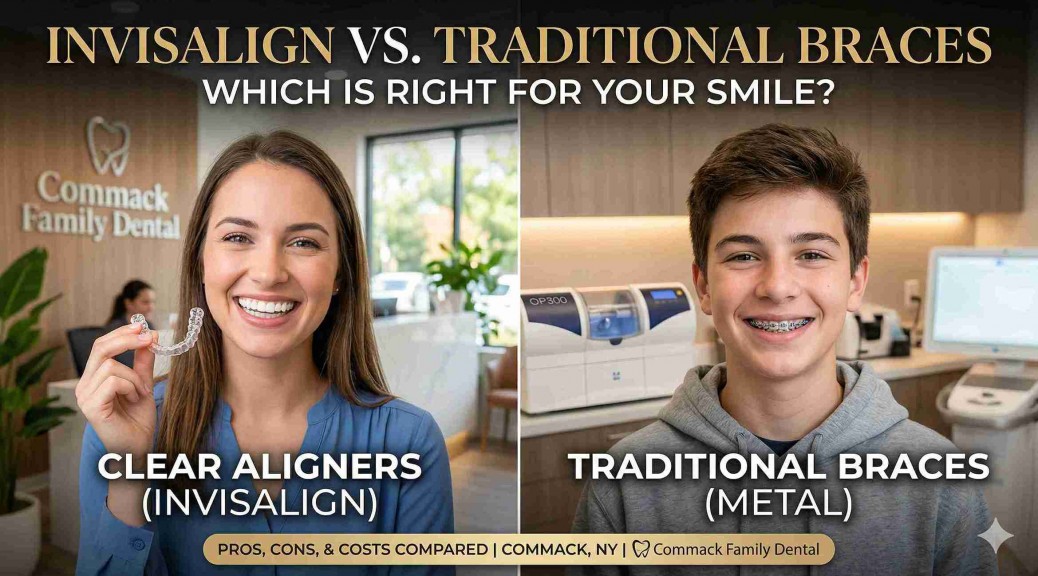
Invisalign vs Traditional Braces: Pros, Cons, and Costs Compared

Are you dreaming of a straighter smile but feel unsure about the best way to get there? If you are choosing between Invisalign and traditional braces, you are not alone. Both are fantastic orthodontic treatment options that effectively straighten teeth and correct bite issues. However, they differ significantly in comfort, cost, and everyday appearance.

Clear aligners vs metal braces is a common debate. While braces use brackets and wires to shift teeth into place, Invisalign relies on a series of virtually invisible trays. Deciding which path to take depends on your unique dental needs, lifestyle, and budget. If you are ready to explore your options, learn more about Invisalign in Commack to see how modern dentistry can transform your smile.

How Invisalign Works vs. Traditional Braces

Understanding how Invisalign works compared to traditional braces is the first step in your journey. Traditional braces use metal or ceramic brackets glued to your teeth, connected by a highly tensioned wire. Your orthodontist tightens this wire periodically to gradually pull your teeth into perfect alignment.

On the other hand, Invisalign uses 3D imaging technology to map out a complete treatment plan. You will wear a series of custom-made, clear plastic aligner trays. Every week or two, you swap out the old tray for a new one, gently moving your teeth step-by-step.

Treatment length varies for both, but maintaining your oral hygiene differs greatly. Braces require special flossing tools and careful brushing around brackets, while aligners pop right out for easy cleaning. Ready to find out which method fits your mouth? Schedule your orthodontic consultation with our team today.

Quick Comparison Chart

Feature Invisalign Traditional Braces
Visibility Nearly invisible Highly visible (metal or ceramic)
Comfort Smooth plastic trays; no sharp edges Wires and brackets can cause cheek friction
Maintenance Easy to remove and clean normally Must brush carefully around brackets and wires
Ideal For Mild to moderate alignment issues Complex dental and bite issues

Pros and Cons of Invisalign

There is a reason why so many adults and teens gravitate toward clear aligners. The biggest pro of Invisalign is its aesthetic appeal. The trays are nearly invisible, allowing you to smile confidently during your treatment. Because they are removable, there are no food restrictions—you can still enjoy popcorn, apples, and sticky foods. Cleaning your teeth is also much easier compared to navigating around metal brackets.

However, Invisalign has its cons. It requires strict discipline. You must wear the trays for 20 to 22 hours a day for the treatment to work effectively. Additionally, clear aligners are not always the ideal solution for severe or complex alignment issues. Our orthodontists at Commack Family Dental have helped many adults choose Invisalign for discreet treatment, but we always evaluate your specific needs first to ensure it’s the right fit.

Pros and Cons of Traditional Braces

Traditional braces have been the gold standard in orthodontics for decades, and for good reason. Their biggest advantage is their sheer effectiveness. Braces can tackle the most complex dental issues, from severe crowding to major bite misalignments. Furthermore, because they are permanently attached to your teeth, they require absolutely no patient compliance—they are working 24/7 whether you think about them or not. Plus, younger patients often love choosing customizable colors for their rubber bands.

On the downside, braces are much more visible. They can also be harder to clean, increasing the risk of plaque buildup if you aren’t diligent. You may also experience occasional discomfort from wires poking your cheeks or lips. Ultimately, choosing between braces and Invisalign depends heavily on your lifestyle, age, and your starting dental condition.

Cost Comparison: Invisalign vs Braces

Let’s talk about the bottom line: Invisalign cost versus braces cost. Generally, Invisalign often costs slightly more than traditional braces, but the sheer convenience and aesthetic benefits easily justify the difference for many patients.

In the United States, you can typically expect the following general cost ranges:

  • Traditional Braces: $3,000 – $7,000

  • Invisalign: $3,500 – $8,000

Keep in mind that these are just averages. The final price depends on the complexity of your case and how long your treatment takes. Fortunately, many dental insurance plans cover a portion of both treatments equally. We also offer flexible payment plans to make your dream smile highly affordable. If you are looking for trusted dental care in Commack, our front desk team is always here to help you navigate your insurance benefits and financing options.

Which Option Is Right for You?

Deciding between Invisalign and traditional braces comes down to personal preference and clinical necessity. Consider your age, daily lifestyle, treatment goals, and budget. If you are a busy professional who wants a discreet look and has the discipline to wear trays daily, Invisalign is likely a winner. If you have severe crowding or want a “set it and forget it” solution, traditional braces might be the better route.

The best way to make a final decision is by letting a professional evaluate your smile. Schedule your orthodontic consultation today to take the guesswork out of the process.

FAQs: People Also Ask

Is Invisalign faster than braces?

In many mild to moderate cases, Invisalign can be faster than traditional braces. Because the trays apply gentle, continuous pressure to all teeth simultaneously, some patients see their final results in as little as 6 to 12 months.

How long does Invisalign take to work?

You will likely start noticing subtle changes in your smile within the first few weeks of wearing your trays. However, full treatment time usually ranges from 12 to 18 months, depending on how consistently you wear them.

Are braces or Invisalign better for teenagers?

It depends on the teen! Invisalign offers a “Teen” line with compliance indicators (small blue dots that fade as the trays are worn). However, if a teenager is prone to losing things or won’t wear the trays for 22 hours a day, traditional braces are the safer, guaranteed bet.

Does Invisalign hurt less than braces?

Generally, yes. Invisalign pros and cons often highlight comfort. While you will feel some pressure for the first day or two after switching to a new aligner tray, there are no sharp metal wires or brackets to cut your cheeks or lips.

Can you eat with Invisalign on?

No, you should never eat with your Invisalign trays in your mouth. Chewing can warp or damage the plastic, and dark foods or drinks can stain them. Always remove your aligners before eating or drinking anything other than plain water.

Which is cheaper: Invisalign or braces?

Traditional metal braces are typically slightly cheaper than Invisalign. However, the exact cost difference varies by case complexity. To explore exact pricing and learn more about Invisalign treatment in Commack, reach out to our team.

Conclusion

Both Invisalign and traditional braces offer reliable paths to a beautifully straight, healthy smile. Whether you prioritize the invisible convenience of clear aligners or the robust, hands-off power of metal brackets, the choice is ultimately yours to make alongside a dental professional.

At Commack Family Dental, our orthodontic experts are dedicated to helping you choose the best treatment for your specific smile goals and budget. Ready to get started? Book your consultation today or visit our Contact Page to reach out online!