
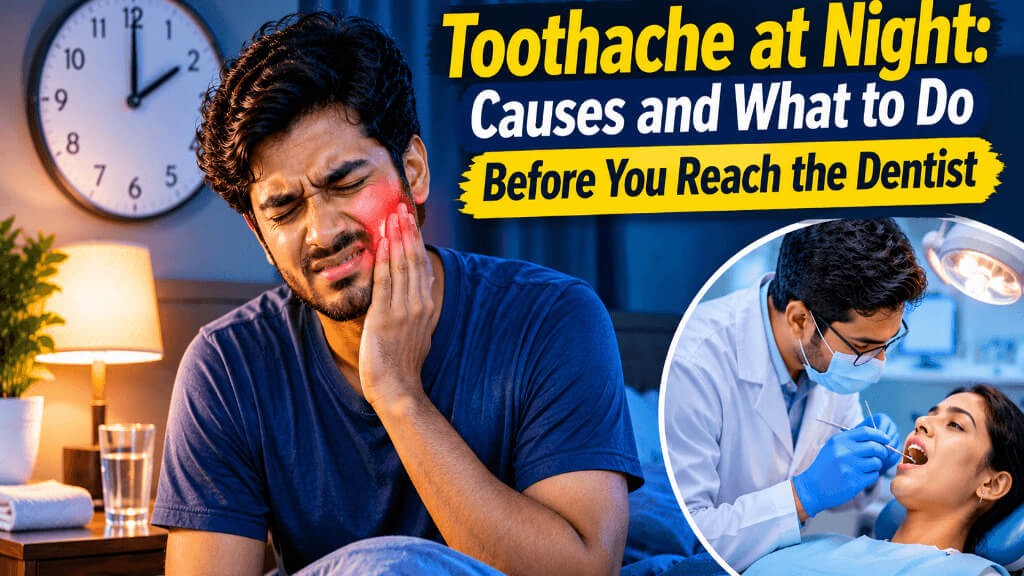
A toothache at night is often caused by tooth decay, a cracked tooth, gum inflammation, an infection, or pressure changes that make existing dental pain feel worse when you lie down. Lying flat can make swelling and pressure more noticeable, and quiet hours leave fewer distractions.
You can use safe comfort measures while you wait for care, but they do not replace a dental exam. Contact a dentist promptly if your pain is severe, keeps coming back, or comes with swelling.
Why Tooth Pain Can Feel Worse at Night
Tooth pain often seems stronger after dark. When you lie down, blood flow and pressure in your head and mouth can change. As a result, a tooth that felt fine during the day may start to throb. In addition, you have fewer distractions at night, so you notice the pain more clearly.
Grinding or clenching during sleep can also irritate a tooth or jaw. Many people do this without knowing it. If you wake up with a sore jaw or sensitive teeth, mention it to your dentist.
A small problem can become harder to ignore when you finally try to rest. Inflammation or infection may worsen over time, so pain can build as the evening goes on. Meanwhile, a cracked tooth or damaged filling may cause sharp pain with biting or temperature changes.
For comfort, you can raise your head slightly with an extra pillow if that feels good, and avoid very hot, cold, or sweet foods. However, pain that keeps getting stronger may point to an infection. In that case, seek a prompt dental evaluation.
Common Causes of a Toothache at Night
Tooth pain is a signal, not a diagnosis. Several different problems can cause it, and only a dentist can tell which one applies to you.
Picture this. You fall asleep fine, then wake at 2 a.m. with a dull throb in one tooth. Or you chewed on something hard at dinner, and now a filling feels sharp when you bite down. These are common ways a toothache at night begins.
| Possible cause | What it may feel like | Other signs | What to do |
| Tooth decay | Sharp, throbbing, or sensitivity to sweet foods | Visible cavity or food trapping | Schedule a dental exam |
| Cracked tooth | Sharp pain when biting or chewing | Pain with temperature changes | Avoid chewing on that side and call the dentist |
| Damaged filling or crown | Sensitivity or pain when biting | Loose, broken, or missing restoration | Arrange a dental visit |
| Gum inflammation | Sore, swollen, or bleeding gums | Redness or tenderness | Schedule a dental cleaning and exam |
| Dental abscess | Throbbing pain, pressure, or a bad taste | Swelling, pus, fever, or bad breath | Seek urgent dental care |
| Food trapped between teeth | Localized pressure or soreness | Floss may remove trapped food | Gently floss and rinse, then monitor |
| Teeth grinding | Jaw soreness or tooth sensitivity | Jaw tightness, headaches, worn teeth | Discuss a night guard or evaluation |
| Wisdom tooth irritation | Pain at the back of the mouth | Swollen gums or difficulty opening fully | Arrange a dental evaluation |
| Sinus pressure | Pain in several upper teeth | Congestion, facial pressure, or cold symptoms | Mention sinus symptoms to a dental or medical professional |
A dental abscess is a pocket of infection, usually near the root of a tooth or in the gum. It needs prompt attention because the infection can spread. However, not every swollen or sore gum is an abscess. A dentist can examine the area and tell you what is going on.
Sinus pain deserves a special mention. The roots of your upper back teeth sit close to your sinuses. Therefore, a sinus infection can make several upper teeth ache at once, even when the teeth are healthy.
Toothache Warning Signs You Should Not Ignore
Most toothaches are not emergencies, but some symptoms need urgent care. Review this table if your pain is severe or you have other symptoms.
| Symptom | Why it matters | What to do |
| Facial, jaw, or neck swelling | May indicate a spreading infection | Contact a dentist urgently or seek emergency care |
| Fever | May indicate infection | Seek urgent dental or medical care |
| Pus or a bad taste | May indicate infection | Contact a dentist promptly |
| Trouble breathing or swallowing | Can be a serious emergency | Seek emergency medical care immediately |
| Severe pain that will not ease | May indicate a serious dental problem | Contact a dentist promptly |
| A tooth that suddenly becomes loose | May indicate infection or injury | Seek urgent dental care |
| Bleeding that will not stop | Needs prompt attention | Seek urgent dental or medical care |
| Pain after facial injury | May involve a cracked tooth or jaw injury | Seek urgent evaluation |
Trouble breathing, trouble swallowing, or significant swelling around the face, eye, or neck requires immediate medical attention. Do not wait for a dental appointment in those situations. Go to an emergency room or call 911.
What to Do Tonight Before You See the Dentist
These steps may help you feel more comfortable while you wait for professional care. They do not cure the cause of a toothache, and they do not replace dental treatment.
- Rinse gently with warm salt water. Mix about half a teaspoon of salt in a cup of warm water. Swish gently and spit it out. Do not swallow it.
- Gently floss to remove trapped food. Food lodged between teeth can cause pressure and pain. Use gentle motions and avoid forcing floss into the gums.
- Use a cold compress on the outside of your cheek. Wrap an ice pack or bag of frozen peas in a clean cloth. Apply it for 15 to 20 minutes at a time. Do not place ice directly on the skin.
- Keep your head slightly elevated. If lying flat makes the pain worse, try an extra pillow if it is comfortable.
- Avoid foods and drinks that trigger pain. Skip very hot, very cold, sweet, sticky, or hard foods until you can be seen.
- Use over the counter pain relief as directed. Follow the label, and ask a pharmacist or healthcare professional if you have questions. Do not exceed the recommended dose.
- Do not place aspirin directly on the tooth or gums. Aspirin can irritate or burn gum tissue.
- Avoid using heat on your face. Heat may increase swelling in some situations. Use a cold compress unless a dental professional advises otherwise.
- Do not try to pop a gum bump or drain swelling yourself. This can worsen infection or spread bacteria.
- Call a dentist as soon as possible. Describe the pain, swelling, fever, injury, or other symptoms so the office can advise you.
If you take prescription medicine or have a health condition, ask your pharmacist or doctor before using any pain reliever. Do not start, stop, or combine prescription medicines on your own.
What Not to Do for a Toothache at Night
Some well meant habits can make things worse. Do not place aspirin directly on the gums, and do not use alcohol, hydrogen peroxide, or undiluted essential oils as a mouth rinse. These can irritate soft tissue. In addition, do not try to drain a swelling or pimple on the gum, because that can spread infection.
Be careful with heat and medicine as well. Avoid a heating pad on your face if swelling is present. Never take someone else’s prescription medication, and do not exceed the labeled dose of any over the counter product.
Finally, do not ignore the pain. Severe or worsening pain should not be left to settle by itself, and pain does not always disappear on its own. If you have fever, swelling, pus, or trouble breathing, do not delay care.
When to Call Dentist
Call the dentist office if your tooth pain lasts more than a day or two, wakes you from sleep, gets worse, or does not improve with safe comfort measures. The sooner a dentist sees the tooth, the more options you may have.
Commack Family Dental provides general, restorative, cosmetic, and implant dentistry, including root canal treatment and emergency dental care. If you are in Commack or elsewhere in Suffolk County, you can contact our office or call for urgent dental care at (631) 759-8284.
If you are unsure whether your symptoms need urgent attention, review this dental emergency checklist. It can help you decide when to call a dentist. You can also describe your symptoms by phone, and the team can advise you on next steps.
What Happens at the Dental Appointment?
Many people feel nervous before a visit for tooth pain. Knowing what to expect can help. Your dentist will start by reviewing your symptoms and dental history. You may be asked when the pain began, what triggers it, and whether it changes with hot, cold, or biting.
Next, your dentist will examine the tooth, your gums, your bite, and the surrounding area. X rays or 3D imaging may be used if needed. These steps help identify decay, cracks, infection, gum problems, or another cause.
Commack Family Dental uses an OP300 CT scanner for 3D dental imaging when appropriate. Not every patient needs imaging. Your dentist will recommend it only when it helps explain your symptoms.
After the exam, your dentist will talk with you about treatment options. The goal is a plan to relieve your pain and address the underlying issue. Tell the team if you feel anxious. They can explain each step before it happens, and you can ask questions at any point.
How Dentists Treat Common Causes of Tooth Pain
The right treatment depends on the diagnosis. The table below shows common approaches, but it is not a promise of what your tooth will need.
| Cause | Common dental treatment approach | What the patient may need to do |
| Cavity | Filling or other restorative treatment | Schedule treatment and follow home care advice |
| Cracked tooth | Crown, bonding, root canal treatment, or extraction depending on severity | Avoid chewing on the tooth until evaluated |
| Damaged filling or crown | Repair or replacement | Bring any broken piece if available |
| Gum disease | Cleaning, periodontal care, or further treatment | Follow the dentist’s home care instructions |
| Dental abscess | Drainage, root canal treatment, or extraction depending on the case | Seek prompt care and follow instructions |
| Wisdom tooth irritation | Evaluation and treatment planning | Avoid irritating the area and follow professional advice |
| Grinding | Night guard or other protective treatment | Discuss symptoms and habits with the dentist |
Home remedies do not cure tooth decay, an infection, or a cracked tooth. They may ease discomfort for a short time. Therefore, treat them as a bridge to your appointment, not a substitute for it.
How to Prevent Future Toothaches
Many toothaches begin as small problems that grow. Daily habits make the biggest difference. Brush twice a day with fluoride toothpaste, and clean between your teeth daily with floss or an interdental cleaner. If food keeps getting trapped in the same spot, do not ignore it. Mention it at your next visit.
Regular dental checkups and cleanings help your dentist spot trouble early. For that reason, address cavities, cracked teeth, and worn fillings as soon as they are found. Tell your dentist about new sensitivity, jaw pain, or gum bleeding too. Seeking care early is easier than waiting for pain to become severe.
Protect your teeth from avoidable stress as well. If you grind or clench, ask about a night guard. Avoid using your teeth to open packages or bite hard objects. In addition, manage dry mouth and stay hydrated, since saliva helps protect your teeth.
Toothache at Night: When It May Be an Emergency
Most nighttime tooth pain can wait for a dental visit, as long as you call promptly. Some symptoms cannot wait. Seek immediate medical care if you have trouble breathing, trouble swallowing, or significant swelling in your face, jaw, neck, or around the eye.
Get urgent care too if you have a high fever, pus or a foul taste, or bleeding that will not stop. The same applies to severe pain that does not improve, or a tooth that suddenly becomes loose after trauma.
A dental office can often help with urgent tooth pain. However, some symptoms need emergency medical evaluation first. If you are not sure, call a dentist or emergency services and describe what you are feeling.
Frequently Asked Question
Q. Why does my toothache get worse at night?
Several things can make pain feel stronger at night. Lying down can change pressure and blood flow in your head. You also have fewer distractions, so you notice pain more. Grinding, inflammation, and infection can add to it. A dentist can examine your tooth and find the cause.
Q. What can I do for a toothache at night while I wait to see a dentist?
You can rinse gently with warm salt water, floss to remove trapped food, and apply a cold compress to your cheek. Keep your head slightly elevated and avoid trigger foods. Over the counter pain relief may help if you use it as directed on the label. These steps are for comfort only, so call a dentist.
Q. Is a toothache at night a dental emergency?
It depends on your symptoms. Many toothaches are not emergencies, but they still need a dental exam. Severe pain, swelling, fever, pus, or trouble breathing needs urgent attention. If you have swelling in your face or neck, or trouble breathing or swallowing, seek emergency medical care right away.
Q. Will a toothache go away on its own?
Pain may ease for a while, but the cause often remains. A cavity, crack, or infection can continue to progress even when you feel better. For that reason, a dental evaluation is important. Seeing a dentist early may give you more treatment options and can prevent a smaller problem from growing.
Q. Is it safe to put aspirin on a painful tooth?
No. Placing aspirin directly on a tooth or gum can irritate or burn the gum tissue. If you choose to use over the counter pain relief, swallow it as directed on the label, and ask a pharmacist or healthcare professional if you have questions. Then contact a dentist for an exam.
Q. When should I go to the emergency room for tooth pain?
Go to the emergency room or call 911 if you have trouble breathing, trouble swallowing, major swelling in your face or neck, or a high fever. These can be signs of a serious infection. For other severe tooth pain, call a dentist promptly, and the office can advise you on next steps.